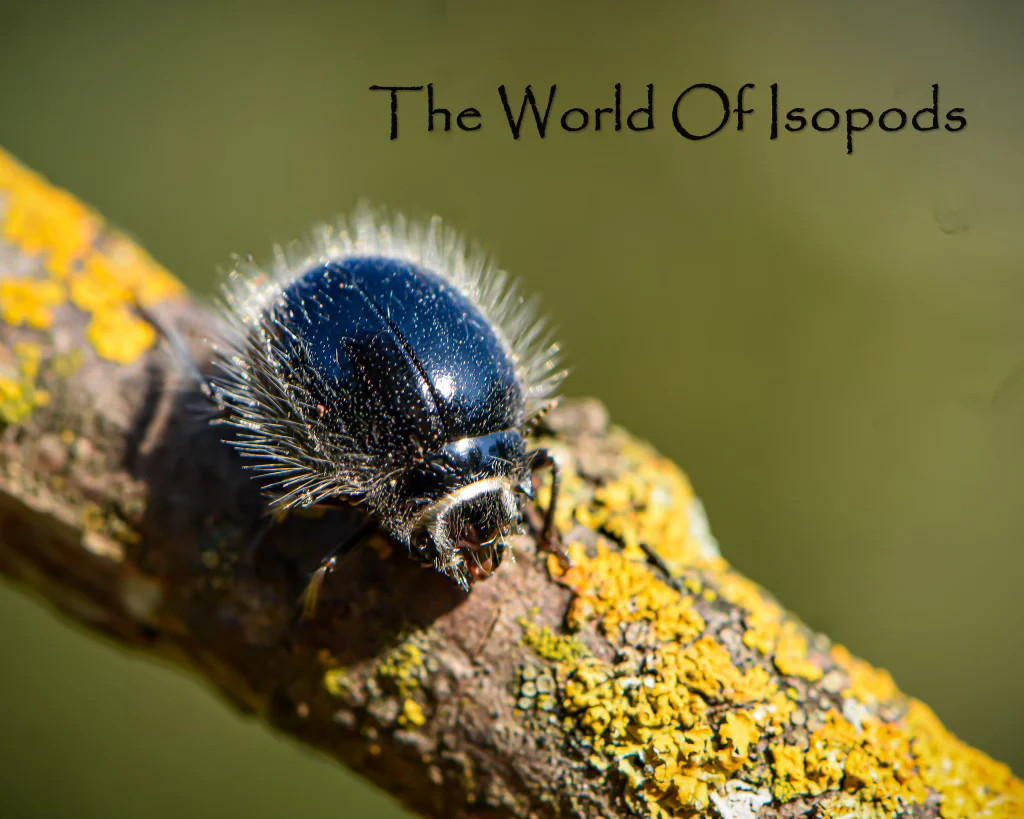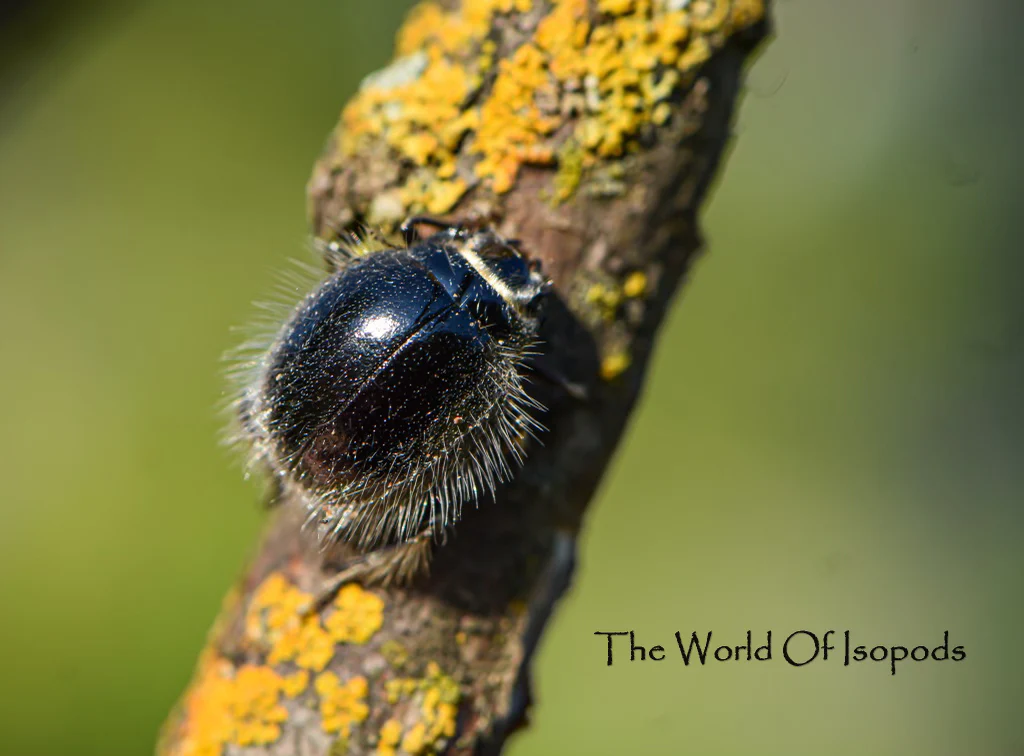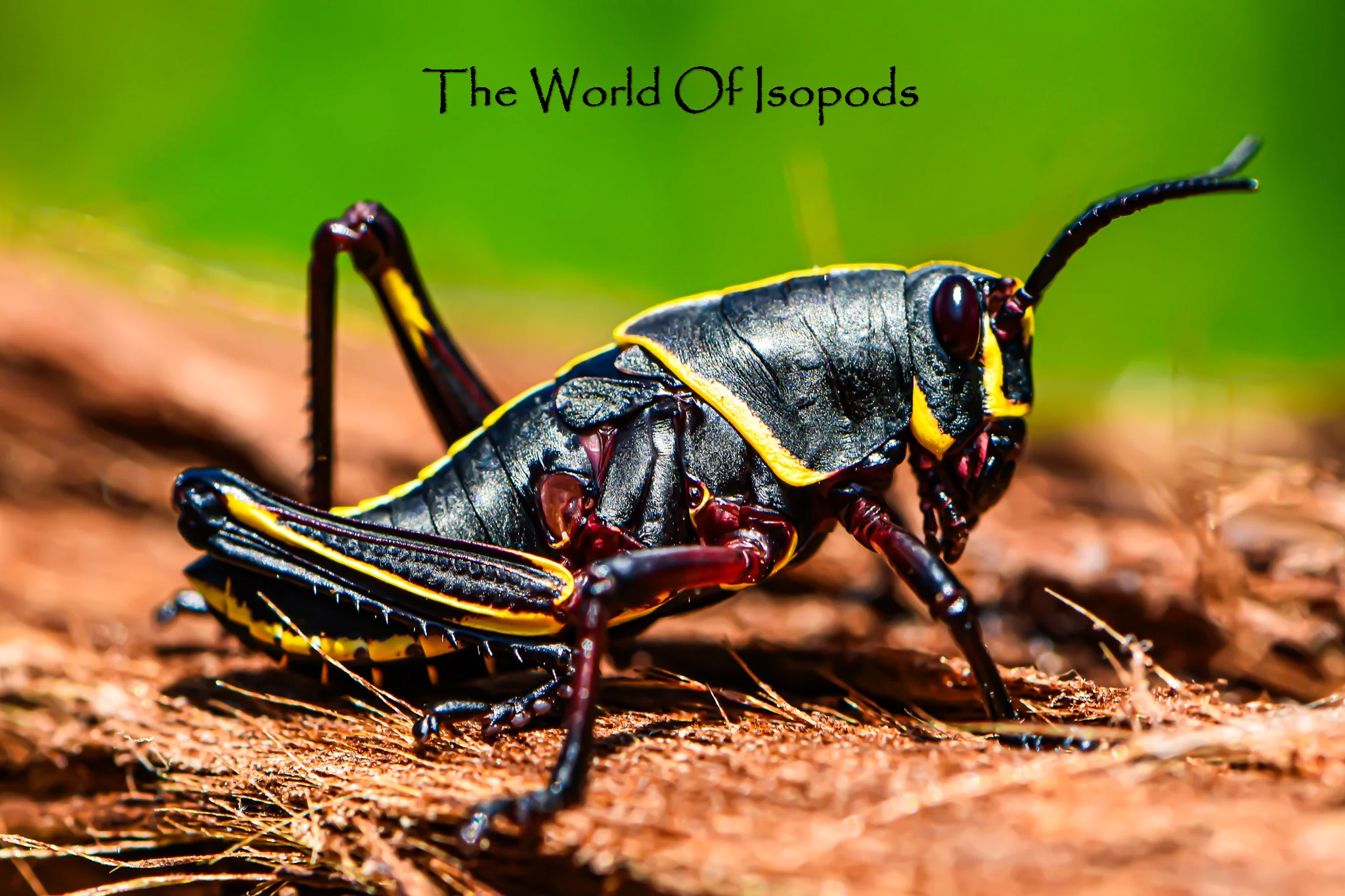
Lubber Grasshopper
The eastern lubber grasshopper (including darker or black color forms) is a large, slow-moving grasshopper that can be kept in captivity with relatively simple care. They do best in a well‑ventilated terrarium with a secure lid, a dry substrate like coconut fiber or paper towels, and plenty of sticks or branches to climb on. Keep the enclosure at room temperature to slightly warm (around the low‑ to mid‑70s°F up to low 80s°F) and provide a gentle heat source if your room is cool. Bright but indirect light helps them maintain a normal day–night cycle. Humidity should be moderate; avoid keeping the enclosure constantly damp, as this can lead to mold and health problems.
Lubber grasshoppers are primarily herbivores and should be offered a variety of leafy greens and vegetables. Collard greens, romaine, dandelion greens, carrot tops, and small pieces of carrot or squash are good staple foods. Always remove uneaten fresh food before it spoils, and provide a shallow dish with fresh water or mist a small area of the enclosure lightly so they can drink droplets, being careful not to over‑moisten the habitat. Spot‑clean regularly to remove waste and shed skins, and avoid handling them roughly or too often; lubbers can release irritating defensive fluids if stressed. With proper diet, cleanliness, and a stable environment, lubber grasshoppers can be hardy and interesting display insects.
Basic care points
-
Keep in a secure, well‑ventilated terrarium with a tight lid
-
Use dry, clean substrate (paper towels, coconut fiber, or similar)
-
Maintain temperatures roughly in the 70s°F to low 80s°F (21–28°C)
-
Provide branches, sticks, and plants for climbing and hiding
-
Feed a mix of leafy greens and vegetables (e.g., collards, romaine, dandelion)
-
Remove old food daily to prevent mold and bacteria
-
Offer a shallow water source or light misting for drinking
-
Clean the enclosure regularly and spot‑clean waste
-
Handle gently and minimally to reduce stress
-
Watch for signs of illness (lethargy, not eating, difficulty molting) and correct habitat issues if noticed
Original: $8.00
-65%$8.00
$2.80Product Information
Product Information
Shipping & Returns
Shipping & Returns
Description
The eastern lubber grasshopper (including darker or black color forms) is a large, slow-moving grasshopper that can be kept in captivity with relatively simple care. They do best in a well‑ventilated terrarium with a secure lid, a dry substrate like coconut fiber or paper towels, and plenty of sticks or branches to climb on. Keep the enclosure at room temperature to slightly warm (around the low‑ to mid‑70s°F up to low 80s°F) and provide a gentle heat source if your room is cool. Bright but indirect light helps them maintain a normal day–night cycle. Humidity should be moderate; avoid keeping the enclosure constantly damp, as this can lead to mold and health problems.
Lubber grasshoppers are primarily herbivores and should be offered a variety of leafy greens and vegetables. Collard greens, romaine, dandelion greens, carrot tops, and small pieces of carrot or squash are good staple foods. Always remove uneaten fresh food before it spoils, and provide a shallow dish with fresh water or mist a small area of the enclosure lightly so they can drink droplets, being careful not to over‑moisten the habitat. Spot‑clean regularly to remove waste and shed skins, and avoid handling them roughly or too often; lubbers can release irritating defensive fluids if stressed. With proper diet, cleanliness, and a stable environment, lubber grasshoppers can be hardy and interesting display insects.
Basic care points
-
Keep in a secure, well‑ventilated terrarium with a tight lid
-
Use dry, clean substrate (paper towels, coconut fiber, or similar)
-
Maintain temperatures roughly in the 70s°F to low 80s°F (21–28°C)
-
Provide branches, sticks, and plants for climbing and hiding
-
Feed a mix of leafy greens and vegetables (e.g., collards, romaine, dandelion)
-
Remove old food daily to prevent mold and bacteria
-
Offer a shallow water source or light misting for drinking
-
Clean the enclosure regularly and spot‑clean waste
-
Handle gently and minimally to reduce stress
-
Watch for signs of illness (lethargy, not eating, difficulty molting) and correct habitat issues if noticed